
Premium residential living is defined by more than beautiful interiors and resort-style amenities. The day-to-day operational infrastructure of a building — how parking is managed, how security is delivered, how maintenance is handled, and how the building’s shared systems are kept functioning at the standard residents paid for — is what determines whether a development delivers on its promises over months and years rather than just on opening day.
At Berkeley at Dubai Hills Estate, the operational infrastructure is designed and managed with the same hotel-inspired discipline that shapes the physical development. Building management is not a back-office function at Berkeley — it is a resident-facing service, and it is held to the service standard that residents of a premium, fully serviced development have the right to expect.
This article provides a complete guide to Berkeley’s parking provision, security systems and protocols, and building management framework — the operational layer that makes Berkeley function as a premium residence rather than merely appear as one. Smart home technology, individual apartment finishes, and lifestyle amenities are covered separately in other articles on this blog.
Parking: Allocation, Access, and Management
Allocated Parking for Residents
Parking provision at Berkeley is structured to match the residential density and unit mix of the development. Each residential unit — studio, one-bedroom, and two-bedroom — is allocated a designated parking bay within the building’s secure basement or podium parking structure. This allocated model, in which each unit owner or tenant has a specific, registered parking space rather than competing for available spaces in a common pool, eliminates the daily friction of parking uncertainty that undermines the quality of life in developments with shared, unallocated parking.
For unit owners, the allocated parking space is a registered component of the property — it transfers with the unit on resale and is included in the tenancy arrangement for long-term residents. For investors operating short-term rentals, the parking allocation provides a tangible amenity that can be marketed alongside the unit — a significant practical differentiator in a city where personal vehicle use is the primary mode of transport and where parking availability is a direct factor in guest satisfaction.
Basement and Podium Parking Structure
Berkeley’s parking structure is integrated within the building’s design rather than provided as an external surface facility. This integrated approach delivers several practical advantages for residents: parking is protected from Dubai’s intense heat, reducing the discomfort of entering an overheated vehicle after outdoor exposure; the distance between parking and the residential entrance is minimised, improving the daily arrival and departure experience; and the parking area is within the building’s secure perimeter, eliminating the exposure to external access risk that surface parking creates.
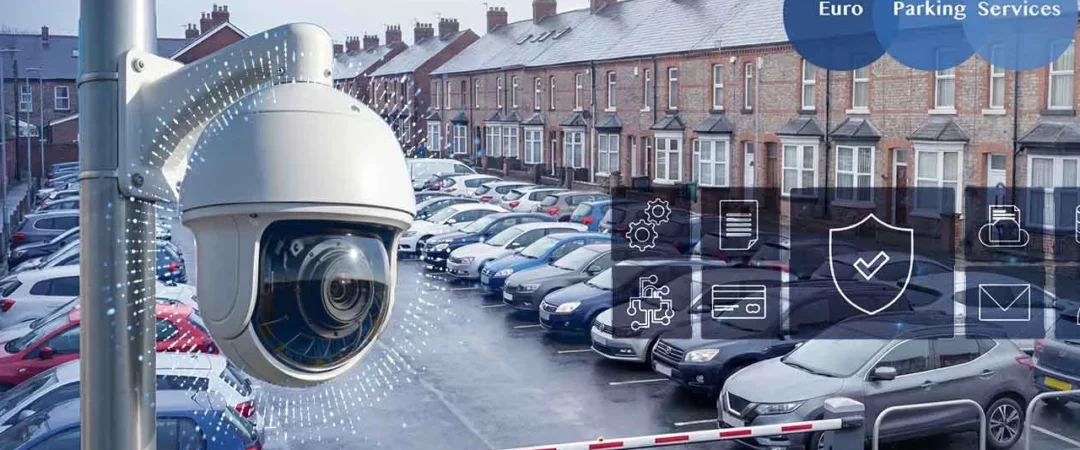
The parking levels are accessed via a controlled entry point with barrier management, CCTV coverage, and registration recognition systems. Residents access parking with their registered vehicle credentials — whether a proximity card, a registered plate recognition system, or an access fob — without requiring manual intervention at each entry. Guest and visitor parking is managed separately from resident allocation, preventing any encroachment on resident-allocated bays.
Electric Vehicle Charging Provision
As Dubai’s EV adoption rate continues to accelerate alongside the UAE’s broader sustainability agenda, parking infrastructure that includes or accommodates electric vehicle charging is increasingly a functional requirement rather than a premium extra. Berkeley’s parking specification addresses this through provision of EV charging points within the parking structure, with capacity appropriate to the development’s unit count and with the infrastructure to expand charging provision as resident demand grows.
For investors, EV charging provision is a forward-looking specification detail that protects the asset’s relevance to the premium tenant market over the medium and long term. Tenants driving electric vehicles — a demographic that skews toward the affluent professional and corporate segment that Berkeley targets — will increasingly factor charging provision into their residential selection criteria.
Visitor Parking
Berkeley’s parking management framework includes a dedicated allocation for visitor and guest parking, managed through the building’s concierge and security desk. Visitors register their vehicle at the concierge on arrival, receive a time-limited parking credential, and are directed to available visitor bays rather than resident areas. This managed visitor parking system prevents the informal occupation of resident bays that creates daily frustration in developments without structured visitor management, and it maintains the operational clarity that a well-run building requires.
For short-term rental guests arriving by personal vehicle or rental car, the visitor parking process is handled through the same pre-arrival coordination that the keyless access system enables — guests can receive parking instructions and credentials alongside their entry codes before arrival, ensuring a smooth, unassisted check-in experience that requires no building staff intervention.
Security: Layers, Systems, and Standards
The Multi-Layer Security Model
Security at Berkeley operates as a layered system in which each layer provides independent protection while reinforcing the effectiveness of the others. The layers — physical infrastructure, monitored technology, operational protocols, and community design — work together to create a security environment that is genuinely protective without being intrusive or institutionally oppressive in the way that over-engineered security can feel in residential settings.
The hotel-inspired model that Berkeley applies to security is instructive here. A luxury hotel does not make guests feel surveilled or restricted. Its security operates invisibly, through professional staff, calibrated technology, and design choices that channel movement and access naturally. Guests feel safe without feeling monitored. Berkeley’s security approach applies the same principle — safety through professionalism and intelligent design rather than through visible fortification.
24/7 Physical Security Presence
Berkeley maintains a professional security presence around the clock. Security personnel are stationed at the building’s primary access points — the main entrance and the parking entry — and conduct regular patrols of the building’s shared areas, parking levels, and perimeter. The consistency of this physical presence is as important as its existence: a security team that is reliably present and professionally engaged creates a deterrent effect that sporadic or casual security provision cannot replicate.
Security staff at Berkeley are trained to the operational standard appropriate to a premium residential building — combining effective access management with the courtesy and service orientation that residents of a hotel-grade development expect from any member of the building’s operational team. The distinction between security and service is deliberately blurred in Berkeley’s operational model: the security team is part of the building’s guest experience, not a separate and adversarial function.
CCTV and Monitoring Infrastructure
Berkeley’s CCTV infrastructure provides continuous monitoring coverage of all shared areas: building entrances, lobby, lift lobbies, corridors, parking levels, pool and amenity areas, and external perimeter zones. Camera placement follows the coverage logic of professional security design rather than the minimum provision model — ensuring that all areas of meaningful access and movement are within monitoring range.
The monitoring feed is connected to a staffed security desk that provides active observation rather than passive recording. This distinction — between a system that watches in real time and a system that only provides retrospective footage — is significant for the quality of security it delivers. Active monitoring enables immediate response to access anomalies, visitor management issues, or security events rather than post-incident review.
Footage retention meets the requirements of Dubai’s regulatory framework for residential building security systems, providing an appropriate historical record while maintaining the data management standards that resident privacy expectations require.
Access Control at Building Level
Building-level access control at Berkeley creates a controlled entry environment at every point of residential ingress. The main entrance operates on a credential-based access system for residents, with visitor and guest entry managed through the concierge desk. Lift access from the lobby to residential floors requires resident credentials, preventing unregistered visitors from reaching residential levels without staff authorisation.
Stairwell access is similarly controlled and monitored, eliminating the common security vulnerability of uncontrolled stairwell entry that exists in many residential buildings. Parking-to-building access points have their own access control layer, ensuring that the secure parking perimeter does not create an unmonitored path into the residential building.
This layered access control architecture — entrance, lift lobby, stairwell, parking interface — creates multiple intervention points for any unauthorised access attempt, significantly reducing the probability of successful perimeter breach without creating the friction and inconvenience that poorly designed access systems impose on legitimate residents and guests.
Integration with Individual Apartment Smart Security
Building-level security at Berkeley integrates with the smart home security systems within individual apartments — the door sensors, window sensors, video entry systems, and smart lock infrastructure covered in the smart home article. This integration creates a unified security environment in which building operations and individual apartment protection function as components of a single system rather than parallel, disconnected layers.
For residents, this integration means that a security event at the building perimeter can be communicated to individual apartment systems, activating appropriate responses within each unit. For investors managing their property remotely, the integration means that building security incidents are communicated through the same notification infrastructure that their apartment security systems use — a single point of awareness rather than multiple disconnected alert channels.
Building Management: Standards, Services, and Operations
The Owners Association and Professional Management
Berkeley at Dubai Hills Estate operates under the Owners Association framework mandated by Dubai’s jointly owned property legislation and regulated by RERA — the Real Estate Regulatory Agency, a division of the Dubai Land Department. The Owners Association is the legal entity responsible for managing the building’s common areas, shared systems, and operational standards, funded through service charges paid by unit owners.
The management company engaged by Berkeley’s Owners Association operates the building’s day-to-day functions — maintenance, cleaning, security coordination, utilities management, and resident services — to the standard agreed in the management contract. The selection and performance accountability of the management company is the single most consequential operational decision in a residential development’s long-term life, and Berkeley’s hotel-inspired positioning requires a management partner capable of delivering hospitality-grade operational standards rather than the minimum regulatory compliance that many residential management companies default to.
Service Charges: Transparency and Value
Service charges — the annual fees paid by unit owners to fund the Owners Association’s operational budget — are a regular and predictable ownership cost that investors must factor into their net yield calculations. In Dubai’s regulated Owners Association system, service charges are subject to RERA oversight and must be transparently accounted for in annual budgets that owners have the right to review.
Berkeley’s service charge structure reflects the genuine operational cost of maintaining a premium building — higher than standard residential developments in Dubai because the facilities being maintained, the cleaning standards being upheld, and the security operation being funded are of a higher grade. This cost premium is not a deficiency — it is the price of the standard. Investors who factor service charges correctly into their return calculations will find that the premium yield commanded by Berkeley’s specification more than compensates for the service charge differential over standard residential comparables.
Service charge transparency at Berkeley operates through the Owners Association’s annual general meeting process, where owners receive a detailed budget breakdown, a comparison with the prior year’s actual costs, and the opportunity to scrutinise management company performance. This accountability framework is a regulatory requirement but also a practical protection for owners who want confidence that their service charge contributions are being deployed effectively.
Preventive Maintenance Programme
The condition of Berkeley’s shared facilities — pool, gym, lobbies, lifts, landscaping, and building fabric — over the long term is determined by the quality and consistency of its preventive maintenance programme rather than by the original specification alone. A building that was beautifully finished at handover but is poorly maintained will deteriorate visibly within three to five years. A building with a rigorous preventive maintenance programme will maintain its physical standard indefinitely.
Berkeley’s building management framework includes a structured preventive maintenance schedule covering all major building systems: air conditioning and HVAC, lifts and escalators, fire suppression systems, electrical infrastructure, water and plumbing systems, pool mechanical and chemical management, landscaping maintenance, and building fabric cleaning and treatment. Each system has a defined maintenance frequency, a qualified contractor responsible for its upkeep, and a performance standard against which the contractor’s work is evaluated.
This systematic approach to maintenance — proactive rather than reactive, scheduled rather than event-driven — is one of the most direct investments a building makes in the long-term preservation of its capital values. Properties in well-maintained buildings command resale premiums over identical units in poorly maintained comparables. The preventive maintenance programme is the operational mechanism through which Berkeley protects the investment value of every unit owner in the building.
Resident Services and Communication
Building management at Berkeley operates as a resident-facing service function, not merely as a technical operations team. Resident requests — maintenance queries, service requests, parking management issues, building access matters — are handled through a structured request management system that tracks each issue from submission to resolution and provides residents with visibility of progress.
Communication between the building management team and residents operates through multiple channels: the concierge desk for immediate in-person requests, a resident communication platform for non-urgent matters, and direct contact protocols for urgent issues requiring immediate operational response. The management team’s service standard — response times, resolution quality, communication clarity — is measured and reviewed as part of the Owners Association’s ongoing performance management of the management company.
For overseas investors who cannot interact with building management in person, the availability of reliable digital communication channels and a responsive management team is a practical necessity rather than a convenience. Berkeley’s management framework is designed to serve the needs of both resident occupants and remote investors equally — recognising that a significant proportion of its unit owners will be managing their assets from outside the UAE.
Waste Management and Building Cleanliness
The cleanliness standard of a building’s shared areas — lobbies, corridors, lift interiors, parking levels, pool areas, and external paths — is one of the most immediately perceptible indicators of management quality. A building that is visibly and consistently clean communicates operational care. A building with inconsistent cleaning standards communicates the opposite, regardless of its original specification.
Berkeley’s cleaning programme covers all shared areas on a scheduled basis, with frequency calibrated to the usage intensity and visibility of each area. High-traffic areas — the lobby, lift lobbies, and pool deck — receive daily attention. Lower-traffic areas receive scheduled weekly or periodic maintenance. External landscaping and garden pathways are maintained by a dedicated horticulture team on a programme appropriate to the species mix and growth rates of Berkeley’s plantings.
Waste management infrastructure within the building provides residents with convenient, hygienic disposal options that maintain building cleanliness without requiring residents to interact with waste management infrastructure beyond their floor level. The building’s waste management system is managed in compliance with Dubai Municipality requirements and Berkeley’s own environmental standards.
The Infrastructure Behind the Experience
Parking, security, and building management are not the most glamorous dimensions of premium residential living. They do not appear on marketing brochures or feature in show unit tours. But they are the operational infrastructure on which everything else depends — the systems and services that determine whether Berkeley’s premium positioning is delivered every day, for every resident, for the full duration of their ownership or tenancy.
For investors, getting comfortable with the quality of Berkeley’s operational infrastructure is as important as evaluating the apartment specification or the rental yield potential. A premium building with poor management deteriorates. A premium building with excellent management appreciates — in physical condition, in rental desirability, and in capital value.
Berkeley’s commitment to hotel-grade operational management is the guarantee that the investment you make today will be worth protecting — and protecting well — for every year of its holding period.
Frequently Asked Questions
How many parking spaces does each apartment type receive at Berkeley Dubai?
Parking allocation at Berkeley is structured by unit type. Studios and one-bedroom apartments are typically allocated one designated parking bay per unit. Two-bedroom apartments are generally allocated two designated parking bays, reflecting the higher probability of multi-vehicle occupancy in family and couple configurations. Specific parking allocation per unit should be confirmed in the Sale and Purchase Agreement and with the Berkeley sales team at the point of reservation, as allocations may vary by specific unit position within the building. For investors, the parking allocation is a registered component of the property title and transfers automatically with the unit on resale or lease.
What is the typical annual service charge at Berkeley Dubai, and what does it cover?
Service charge rates at Berkeley are set annually by the Owners Association based on the actual operational cost budget for the building and are expressed as a rate per square foot of the unit’s built-up area. As a guide, premium furnished residential developments in Dubai Hills Estate with full amenity programmes typically carry service charges in the range of AED 15–25 per square foot per year, though Berkeley’s specific rate may vary based on its operational cost structure and management contract. The service charge covers building management fees, HVAC maintenance and operation of common areas, security operations, cleaning and janitorial services, pool and gym maintenance, landscaping, lift maintenance, fire system testing, building insurance for common areas, and Owners Association administrative costs. Investors should request the current service charge rate directly from the Soho Development sales team or the building’s Owners Association management company to incorporate the accurate figure into their net yield calculations.
How does visitor and guest access work at Berkeley for short-term rental operations?
Short-term rental guests at Berkeley are processed through the building’s visitor management protocol, which is designed to be operationally smooth while maintaining building security standards. Prior to arrival, the property manager or investor registers the guest’s expected arrival window with the building management team or through the digital pre-registration system. Upon arrival, the guest identifies themselves at the concierge desk and receives their visitor access credential — which, in conjunction with the apartment’s smart lock access code, provides full access to the unit and to designated common amenity areas during their stay. The visitor credential is time-limited to the booking period and is automatically deactivated at checkout. For short-term rental operators managing multiple Berkeley units, pre-registration can be handled through the building management’s digital communication platform, reducing the concierge interaction to a brief check-in formality rather than a full manual registration process.
Who is responsible for maintenance inside individual apartments versus common areas?
The division of maintenance responsibility at Berkeley follows the standard Owners Association framework under Dubai’s Jointly Owned Property Law. Common area maintenance — all shared facilities, building fabric, systems, and infrastructure outside individual apartment boundaries — is the responsibility of the Owners Association and is funded through service charges. Maintenance within individual apartment boundaries — fixtures, fittings, appliances, internal fit-out, and anything within the unit’s demised area — is the responsibility of the unit owner or, under the terms of a tenancy agreement, shared with the tenant according to the lease provisions. For investors on long-term leases, the lease agreement typically specifies which maintenance categories are the tenant’s responsibility (minor day-to-day maintenance) and which remain with the landlord (structural repairs, major appliance replacement). For short-term rental operators, all internal maintenance costs are typically the investor’s responsibility as the operational business owner.
How are disputes between residents and the building management handled at Berkeley?
Disputes between individual unit owners and the building management company, or between owners and the Owners Association, are managed through the escalation framework established under RERA’s jointly owned property regulations. At the first level, disputes are addressed through direct engagement with the building management company’s senior management. If resolution is not achieved, the matter can be escalated to the Owners Association board, which has the authority to instruct the management company on the issue or, in serious cases, to review the management contract itself. Unresolved disputes can be referred to RERA’s Owners Association dispute resolution mechanism, which provides a formal regulatory process with binding outcome authority. For day-to-day service quality issues — cleaning standards, maintenance response times, parking management — the resident communication platform provides a documented escalation trail that ensures issues are tracked and resolved rather than informally managed.