
In a city the size and scale of Dubai, how a residential address connects to the rest of the urban fabric is as important as the quality of the address itself. A premium apartment in an inaccessible location imposes a daily tax on its residents — in time lost to traffic, in frustration at limited transport options, and in the psychological weight of feeling cut off from the city’s opportunities and experiences.
Berkeley at Dubai Hills Estate occupies one of the most strategically connected positions in Dubai’s residential market. Its location within Dubai Hills Estate — a master-planned community positioned at the convergence of several of Dubai’s major arterial road networks — gives residents access to the city’s key destinations with a directness and efficiency that many more centrally located addresses cannot match.
This article covers everything residents and investors need to know about transport and connectivity near Berkeley: the road network, public transport infrastructure, cycling and pedestrian routes, and the ride-hailing ecosystem that serves the development’s daily mobility needs. Infrastructure around Berkeley — schools, hospitals, retail — is covered in a separate article on this blog.
Road Network: Dubai’s Arterial Framework at Berkeley’s Doorstep
Al Khail Road (E44): The Primary Connection Artery
Al Khail Road is the single most important piece of transport infrastructure serving Berkeley’s location. One of Dubai’s most significant north-south arterial roads, Al Khail Road connects Dubai Hills Estate directly to the full length of Dubai’s urban corridor — from the southern industrial and logistics zones near Al Quoz, through the city’s commercial heartland in Business Bay and Downtown, northward toward Jumeirah and ultimately to the Palm Jumeirah and Dubai Marina zones.
For Berkeley residents, Al Khail Road access represents direct connectivity to the majority of Dubai’s major employment districts without the bottleneck dependence on Sheikh Zayed Road that constrains movement for much of the city’s western residential population. The road’s capacity, its relative freedom from the grid-lock conditions that affect Dubai’s busier arterials during peak hours, and its multi-lane design make it one of the city’s more reliable daily commuting routes.
Journey times from Berkeley via Al Khail Road to key destinations under normal traffic conditions provide a practical framework for understanding the development’s connectivity advantage. Downtown Dubai and the Burj Khalifa area — Dubai’s commercial and cultural centrepoint — is accessible in approximately 15 minutes. Business Bay, home to many of Dubai’s major corporate offices and co-working environments, is similarly within 15 minutes. Dubai International Airport, critical for Berkeley’s internationally mobile resident demographic, is reachable in approximately 20–25 minutes via Al Khail Road’s connection to the broader motorway network.
Sheikh Mohammed Bin Zayed Road (E311): The Orbital Connector
Sheikh Mohammed Bin Zayed Road — commonly referred to as the E311 or MBZ Road — provides Berkeley residents with a different but equally important connectivity axis: the orbital route that links Dubai’s residential communities laterally, connecting Dubai Hills Estate to destinations across the city without requiring passage through Downtown Dubai’s higher-density traffic zones.
The E311’s connections are particularly relevant for Berkeley residents travelling to Abu Dhabi Road-accessible destinations, to Dubai Silicon Oasis, to Academic City, and to the broader range of commercial and industrial zones that house significant employment in Dubai’s non-marina, non-downtown districts. For residents whose daily commute targets these eastern and southern destinations, the E311 provides a more direct routing than Al Khail Road’s predominantly north-south alignment.
Umm Suqeim Road (D63) and Internal Estate Roads
Umm Suqeim Road serves as a secondary arterial connection that links Dubai Hills Estate to the Jumeirah Beach corridor — Al Barsha, Umm Suqeim, and the beachfront areas that many of Berkeley’s residents will access for leisure, dining, and weekend activities. The road also provides access to Mall of the Emirates — one of the most significant retail, dining, and entertainment destinations within a short drive of Berkeley — via its connection through Al Barsha.
Dubai Hills Estate’s internal road network is itself a significant connectivity asset. The estate’s roads were master-planned for contemporary traffic volumes and pedestrian comfort, avoiding the congestion-prone, narrow-street character of older Dubai residential areas. Road widths, roundabout positioning, and traffic flow management within the estate ensure that Berkeley residents experience smooth internal circulation rather than the internal bottlenecks that affect many high-density residential communities.
Parking and Private Vehicle Convenience
Dubai’s transport culture is fundamentally vehicle-oriented, and Berkeley’s parking provision — covered in detail in the building management article — ensures that residents with private vehicles can access the road network without the friction of parking shortages or uncontrolled street parking that affects less well-managed residential addresses. The combination of allocated resident parking, managed visitor parking, and the estate’s internal road quality makes private vehicle ownership at Berkeley a genuinely convenient and practical daily experience.
Public Transport: Metro, Bus, and the Expanding Network
Dubai Metro: The Route 2020 Extension
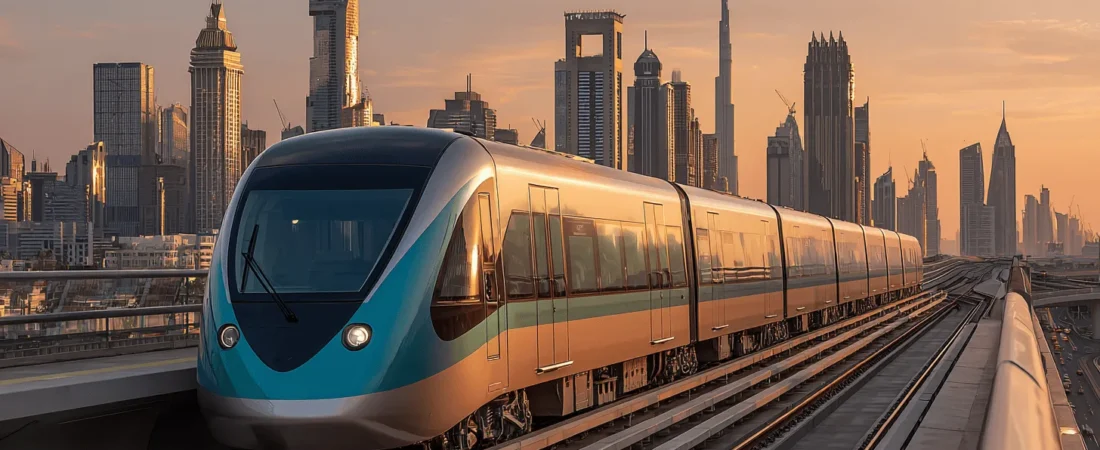
The most significant public transport development serving Dubai Hills Estate and Berkeley residents is the Dubai Metro Route 2020 extension — the Red Line expansion that was built to serve the Expo 2020 site in Dubai South and which has expanded the metro network’s footprint substantially beyond its original terminus at Jebel Ali.
The Route 2020 line includes a station at Dubai Hills Estate — the Dubai Hills Metro Station — which, when operational at full service capacity, brings Dubai’s world-class metro network directly to Berkeley’s community. The metro’s frequency, air-conditioned comfort, and connection to the broader Red Line and Green Line networks make it the most efficient public transport option for residents travelling to Downtown Dubai, Dubai Marina, Business Bay, and Dubai International Airport.
For Berkeley’s international and expatriate resident demographic — a population segment that is frequently familiar with and comfortable using high-quality metro systems from Singapore, London, Hong Kong, and other transit-oriented cities — the Dubai Metro’s extension to Dubai Hills Estate transforms the community from a car-dependent address to a genuinely multi-modal one. This transition has meaningful implications for both quality of life and for the development’s appeal to residents who prefer or require public transport access.
Bus Network: Feeder Services and Community Coverage
Dubai’s RTA bus network provides feeder services that connect Dubai Hills Estate to the broader metro network and to destinations not directly accessible by metro. The bus routes serving the area operate on schedules designed to provide practical connectivity for daily commuters and complement the metro’s trunk network function.
Community bus services within Dubai Hills Estate serve the internal circulation needs of residents who prefer not to drive within the community — connecting residential zones to Dubai Hills Mall, the estate’s healthcare facilities, and the metro station. For Berkeley residents without private vehicles, or for those who prefer to leave their car at home for certain journeys, the community bus service provides a practical alternative to ride-hailing for short internal trips.
Dubai Metro Red Line: Destination Coverage
The Red Line’s existing coverage — operational and well-established — already serves many of the destinations that Berkeley residents travel to most frequently. Understanding the Red Line’s reach from the Dubai Hills Metro Station provides a clear picture of the destinations accessible by metro from Berkeley without any road driving.
Union Station, the network’s central interchange, is accessible from Dubai Hills Estate via the Route 2020 line’s connection to the Red Line, providing onward connectivity to the Green Line’s destinations including Deira, Gold Souk, and Al Rigga. Burj Khalifa/Dubai Mall station — the metro stop serving Downtown Dubai’s primary retail and tourism zone — is directly accessible on the Red Line. Dubai Marina Mall and Jumeirah Lakes Towers are served by the Red Line’s marina section, making JLT’s business district and Dubai Marina’s leisure and dining offer easily metro-accessible from Berkeley.
Ride-Hailing and Taxi Services
Uber, Careem, and the Ride-Hailing Ecosystem
Dubai’s ride-hailing ecosystem is one of the most mature and efficient in the world. Uber and Careem — the two dominant platforms — provide coverage across the full city, with response times at Dubai Hills Estate that are consistently among the faster pickup times in Dubai’s suburban residential zones. This efficiency reflects the estate’s well-established residential density and the platform-aware nature of the professional tenant demographic that Berkeley attracts.
For Berkeley residents without private vehicles, or for those who prefer not to drive to destinations where parking is inconvenient — Dubai Marina, JBR Beach, Deira — ride-hailing provides the practical mobility layer that makes car-free living at Berkeley genuinely viable rather than theoretically possible. The Uber and Careem apps’ reliability, surge pricing transparency, and driver quality standards in Dubai make them a default transport choice for many of Berkeley’s professional residents for a significant proportion of their weekly journeys.
Dubai Taxis: RTA Licensed Fleet
Dubai’s RTA-licensed taxi fleet remains the most reliable and extensively covered ground transport option for residents who prefer a metered alternative to ride-hailing platforms. Taxi availability at Dubai Hills Estate is supported by the estate’s established residential population, with rank-based availability at Dubai Hills Mall and app-hailed RTA taxis available for doorstep pickup throughout the community.
For airport transfers — particularly relevant for Berkeley’s internationally mobile residents and their incoming guests — RTA taxis provide a predictable, officially licensed service that avoids the surge pricing vulnerability of ride-hailing platforms during peak periods and school holidays.
Limousine and Chauffeur Services
Dubai’s premium residential market supports a significant chauffeur and limousine service sector — a reflection of the affluent professional demographic that inhabits communities like Dubai Hills Estate. For Berkeley residents who prefer chauffeured transport for business travel, airport transfers, or leisure outings, the development’s location and tenant profile means that limousine and corporate car service providers are familiar with the address and provide prompt, reliable coverage.
Cycling and Active Mobility
Dubai Hills Estate Cycling Network
Dubai Hills Estate’s master plan includes an extensive cycling and pedestrian pathway network that connects residential zones to the community’s parks, retail areas, and recreational facilities. For Berkeley residents who cycle — a growing segment of Dubai’s professional population, particularly during the October to April cooler months — the internal cycling network provides a car-free mobility option for intra-community journeys that is genuinely pleasant rather than merely functional.
The cycle paths connect Berkeley’s location to Dubai Hills Park, Dubai Hills Mall, and the estate’s green belt infrastructure, allowing residents to complete significant leisure and convenience journeys by bicycle without encountering motor vehicle traffic. The quality of the cycling infrastructure — dedicated lanes, smooth surfacing, and shaded sections where the pathway route passes through the estate’s landscaped areas — reflects the master planner’s commitment to active mobility as a genuine transport option rather than a planning box-ticked afterthought.
Running and Jogging Routes
For residents who prefer running as their active mobility and exercise mode, the Dubai Hills Estate pathway network provides a circuit of sufficient length and variety to support serious running training. The paths through the golf course periphery and along the green belt provide aesthetically rewarding routes that compare favourably to the pavement running that constitutes the daily reality for residents of more urban Dubai addresses.
Connectivity for Remote Workers and Professionals
High-Speed Internet Infrastructure
Dubai Hills Estate’s infrastructure specification includes high-speed fibre optic internet connectivity — delivered through Etisalat (now e&) and du, the UAE’s two primary telecommunications providers. Berkeley’s individual apartments connect to this building-level fibre infrastructure, providing residential broadband speeds appropriate to the remote working, video conferencing, and content streaming needs of the professional and corporate tenant demographic.
For the growing segment of Berkeley’s resident population who work remotely — either full-time or in hybrid working arrangements — reliable, high-speed home internet is a primary residential requirement that Berkeley’s connectivity infrastructure fully addresses. The stability and performance of the building’s internet connectivity is a detail that remote-working tenants will verify before signing any lease, and Berkeley’s fibre-connected specification means this inquiry will consistently receive a positive answer.
International Flight Connectivity from Dubai
Dubai’s position as one of the world’s primary aviation hubs is a structural connectivity advantage that extends well beyond the immediate city. For Berkeley’s internationally mobile residents — professionals, entrepreneurs, and family occupants with regular international travel needs — Dubai International Airport’s route coverage provides access to virtually every major business and leisure destination in the world, typically with a direct service or at most a single connection.
Al Maktoum International Airport, Dubai’s second airport and the intended long-term primary aviation gateway for the city, is accessible from Berkeley via Al Khail Road’s connection to Emirates Road — a journey of approximately 30–40 minutes under normal traffic conditions, and one that is directly relevant to residents travelling on Emirates, flydubai, and the airlines that operate from Al Maktoum’s expanding terminal infrastructure.
Connectivity Summary: Journey Times from Berkeley
The following journey time estimates provide a practical reference for Berkeley residents and prospective buyers evaluating the development’s connectivity profile. All times are approximate and assume normal traffic conditions on weekdays outside peak morning and evening commute periods.
Downtown Dubai / Burj Khalifa — approximately 15 minutes by car via Al Khail Road. Accessible by Dubai Metro (Route 2020 connection to Red Line) in approximately 25–30 minutes including interchange time.
Business Bay — approximately 15 minutes by car. Reachable by metro in approximately 25 minutes.
Dubai Marina / JBR — approximately 20–25 minutes by car via Umm Suqeim Road. Accessible by metro with Red Line connection in approximately 35–40 minutes.
Dubai International Airport (DXB) — approximately 20–25 minutes by car via Al Khail Road. Metro accessible in approximately 40–45 minutes including connections.
Mall of the Emirates — approximately 12 minutes by car via Umm Suqeim Road.
Abu Dhabi (ADNEC / Corniche) — approximately 80–90 minutes by car via Sheikh Zayed Road or E311. This journey time is relevant for Berkeley residents with Abu Dhabi-based professional commitments or frequent Abu Dhabi leisure travel.
Al Maktoum International Airport (DWC) — approximately 30–40 minutes by car via Emirates Road.
Connected by Design
Berkeley’s connectivity advantage is not accidental — it is the result of its positioning within a master-planned community that was itself located at a strategic node in Dubai’s road and transport network. The combination of Al Khail Road’s city-wide reach, the Route 2020 metro extension, Dubai’s mature ride-hailing ecosystem, and the estate’s internal cycling network creates a multi-modal mobility environment that serves every type of journey, every type of resident, and every time of day.
For residents, this connectivity means that Berkeley feels close to everything that Dubai has to offer — without sitting inside the congestion and noise that proximity to the city core would otherwise entail. For investors, it means that the development’s locational appeal is durable across every tenant type — the metro-using young professional, the car-dependent family, the remote worker who travels to the airport weekly, and the leisure-oriented resident for whom Dubai Marina is a Saturday destination rather than a Tuesday commute.
Frequently Asked Questions
Is there a Dubai Metro station near Berkeley Dubai, and when will it be operational?
The Dubai Hills Metro Station on the Route 2020 extension of the Red Line is the designated station serving Dubai Hills Estate and Berkeley. The Route 2020 line was built and inaugurated to serve the Expo 2020 site in Dubai South, with Dubai Hills Estate among the residential communities along the corridor. Service status and full operational frequency for the Dubai Hills station should be verified with the Roads and Transport Authority (RTA), as service schedules, frequency improvements, and station activation timelines are subject to RTA operational decisions that may have been updated since the time of writing. Prospective buyers and investors are recommended to check the RTA’s current metro map and service announcements for the most accurate information on current and planned station operational status at the time of their purchase decision.
What is the most convenient transport option for a Berkeley resident commuting to Downtown Dubai daily?
For the daily Downtown Dubai commute, Berkeley residents have two primary options depending on personal preference and commute time tolerance. By car via Al Khail Road, the journey takes approximately 15 minutes under normal traffic conditions, making it one of the more manageable car commutes in Dubai’s residential market. By Dubai Metro — once the Dubai Hills Station is fully operational — the journey involves the Route 2020 line connecting to the Red Line at a designated interchange station, with a total journey time of approximately 25–30 minutes to Burj Khalifa/Dubai Mall station. Residents whose offices are close to a metro station typically find the metro option competitive with driving on a time basis once parking search time and building access are factored into the car journey’s total door-to-door duration.
How accessible is Berkeley Dubai from Dubai International Airport for arriving tenants and guests?
Dubai International Airport (DXB) is accessible from Berkeley in approximately 20–25 minutes by car under normal traffic conditions, using Al Khail Road as the primary routing. This journey time is among the better airport access times for Dubai Hills Estate addresses, and it is within the range that most international arrivals — whether long-term tenants, short-term rental guests, or property owners — find manageable after a long-haul flight. Ride-hailing via Uber or Careem from DXB to Berkeley is available immediately upon arrival through the airport’s designated ride-hailing pickup zones, providing a door-to-door transfer that requires no pre-booking for most arrival times. For investors operating short-term rentals, the airport’s proximity and the ease of the ride-hailing transfer from DXB to Berkeley is a meaningful guest experience factor that supports positive arrival reviews.
Are there cycling paths from Berkeley to Dubai Hills Mall and Dubai Hills Park?
Yes. Dubai Hills Estate’s master-planned cycling and pedestrian pathway network provides dedicated cycling infrastructure that connects the residential zones of the estate — including Berkeley’s location — to Dubai Hills Park and to the Dubai Hills Mall area. The cycling paths are designed as dedicated routes rather than shared pavement space, providing a safer and more enjoyable cycling experience than is available in older Dubai residential areas. During Dubai’s cooler months — approximately October through April — cycling to the mall or the park is a practical and pleasant option that many of the estate’s active residents use regularly. During the hotter summer months, the combination of high temperatures and high humidity makes cycling significantly less comfortable, and most residents default to driving or ride-hailing for these journeys during this period.
How does Berkeley’s road connectivity compare to other Dubai Hills Estate residential options?
Berkeley’s specific position within Dubai Hills Estate gives it good access to the estate’s internal road network and, from there, to Al Khail Road as the primary external connection artery. Within Dubai Hills Estate, properties positioned closer to Al Khail Road access points benefit from slightly shorter journey times to the road network than properties deeper within the estate’s internal zones. Berkeley’s location is well-positioned relative to the estate’s primary access routes, making it among the more convenient Dubai Hills Estate addresses for commuters using Al Khail Road. For investors evaluating Berkeley against other development options within the estate, the specific road access from Berkeley’s building entrance to the estate’s main road network is a detail worth confirming with the sales team relative to the specific competing alternatives under consideration.