
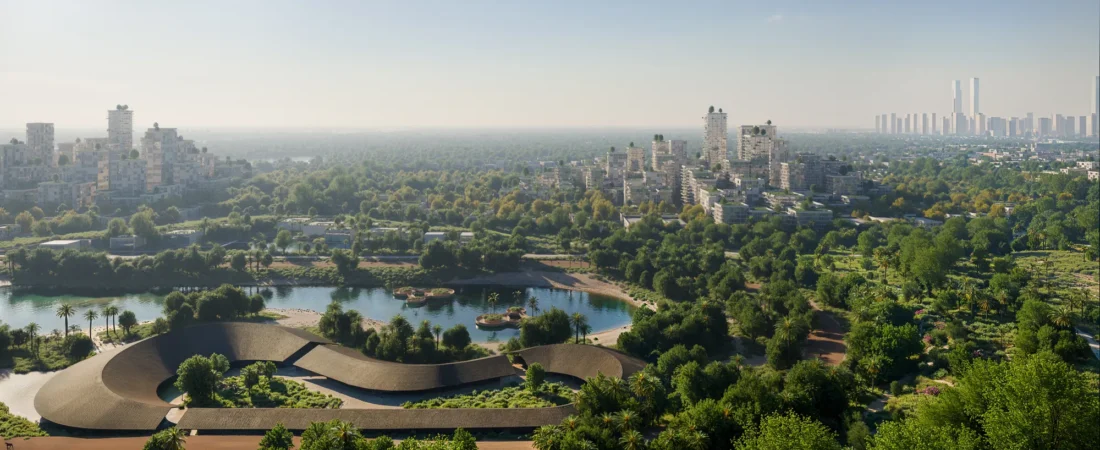
Every real estate investment is ultimately a bet on the future. The value of a property today reflects what the market currently knows — the existing infrastructure, the current tenant demand, the present quality of the community. The value five or ten years from now will be determined by what happens next: the infrastructure that is built, the communities that mature, the population that arrives, and the city’s trajectory as a whole.
For investors in Berkeley at Dubai Hills Estate, understanding the development plans surrounding the property — what is planned, what is under construction, and what is expected to transform the area over the coming decade — is essential context for evaluating the investment’s long-term value trajectory. This article maps that future growth landscape in detail.
Dubai Hills Estate: A Community Still Maturing
Dubai Hills Estate is not a finished product. It is a master-planned community in the process of reaching its full built-out potential — and understanding this distinction is fundamental to understanding Berkeley’s future value environment.
The estate was master-planned by Emaar Properties to accommodate a total community of tens of thousands of residents across a mix of apartment towers, villa communities, hotels, commercial zones, and public amenity infrastructure. At the time of writing in 2026, Dubai Hills Estate has progressed significantly from its early-phase residential launches but has not yet reached the full density, retail activation, and community completeness that its master plan envisions.
This means that Berkeley investors today are positioned within a community that is appreciating toward its intended final state — not one that has already reached it. The gap between the current state of Dubai Hills Estate and its masterplan completion represents unrealised infrastructure value that will accrete to property values progressively as each new phase of development delivers.
The pattern is well-established in Dubai’s real estate history. Communities like Arabian Ranches, Jumeirah Islands, and The Sustainable City all demonstrated that properties purchased at early-to-mid phases of community development outperformed the broader market as the communities filled in, amenities activated, and the full lifestyle proposition became a daily lived reality rather than a prospectus promise.
The Dubai Metro Route 2020 Extension: Full Service Activation
The single most significant piece of transport infrastructure affecting Berkeley’s future value is the full activation and optimisation of the Dubai Metro Route 2020 line, which includes the Dubai Hills Metro Station serving the estate directly.
The Route 2020 extension was built to serve the Expo 2020 site in Dubai South and opened ahead of the global event. The line passes through Dubai Hills Estate, and as the RTA progresses its post-Expo operational plans, the full integration of the Dubai Hills Station into the daily metro service network — with optimised frequency, extended operating hours, and robust feeder bus connectivity — will transform Berkeley’s public transport accessibility in a way that has direct bearing on property values.
International real estate research consistently demonstrates that residential property values within walking or short-drive distance of a metro station appreciate at a meaningfully higher rate than comparable properties beyond the station’s catchment area. This transit premium effect is observable in Dubai’s own history — properties near the original Red Line stations in Dubai Marina and Downtown appreciated significantly as metro service became established and daily ridership grew.
For Berkeley, the full activation of the Dubai Hills Metro Station is a pending value catalyst that has not yet been fully priced into current property values. As metro service to the station matures and daily ridership grows, the demand premium for Berkeley’s location — already within the station’s catchment — will strengthen.
Dubai Hills Estate Phase Completions: New Residential and Commercial Zones
Emaar’s master plan for Dubai Hills Estate includes residential, commercial, hospitality, and community zones that are still in various phases of planning, construction, and delivery. Each new phase that completes adds population, retail activation, and community energy to the estate — all of which directly support property values and rental demand for existing buildings like Berkeley.
Hospitality Additions
Dubai Hills Estate’s master plan includes hotel and serviced apartment developments that will add a hospitality layer to the community. The arrival of branded hotel operations within the estate — providing short-stay accommodation, dining, spa, and event facilities — will deepen the estate’s appeal to both residential tenants and the short-stay visitor market. For Berkeley investors operating short-term rental programmes, the addition of hotel-quality hospitality infrastructure within the community further validates the premium positioning that their property commands in the short-stay market.
Commercial and Office Zones
The commercial component of Dubai Hills Estate’s masterplan includes office and business park zones that will bring employment activity into the community. The maturation of a local employment base within the estate — reducing commute distances for a proportion of residents — is a liveability improvement that supports residential demand and rental premium. Communities where residents can live, work, and access leisure within a single master-planned environment consistently command higher property values than those where all employment requires external commuting.
Community Retail Activation
As Dubai Hills Estate’s residential population grows with each new phase of delivery, the commercial viability of street-level community retail improves — attracting the neighbourhood restaurants, cafés, convenience stores, and service providers that complete the daily lifestyle picture of a well-functioning urban community. This progressive retail activation is a direct quality-of-life improvement for Berkeley’s residents and a value-enhancement driver for Berkeley’s investment proposition, as the estate’s walkable retail environment matures from its current early-phase state toward the full community-scale offer that the master plan envisions.
Al Maktoum International Airport: The Long-Term Connectivity Multiplier
Al Maktoum International Airport — currently known as Dubai World Central (DWC) — is the subject of one of the most ambitious infrastructure expansion plans in Dubai’s history. The airport, located in Dubai South approximately 30–40 minutes from Berkeley via Emirates Road, is planned for expansion to eventually handle up to 260 million passengers annually — a capacity that would make it the world’s largest airport by passenger throughput.
While this expansion will unfold over a multi-decade timeline, its implications for residential property values in Dubai’s southern and central residential communities are significant. As Al Maktoum International becomes a major aviation hub in its own right — hosting expanded Emirates operations, additional airline tenants, and the full range of commercial, logistics, and hospitality activity that a world-scale airport generates — the demand for residential property within reasonable commuting distance of the airport will grow substantially.
Berkeley’s position in Dubai Hills Estate places it approximately 30–40 minutes from Al Maktoum International — close enough to benefit from the employment and connectivity value that a world-scale airport generates, without the noise or visual impact that immediate airport adjacency would impose on residential amenity. This positions Berkeley in the optimal zone of proximity: far enough to retain residential quality, close enough to capture the value premium.
Dubai South and Expo City: The Southern Urban Corridor
The transformation of the Expo 2020 site into Expo City Dubai — a permanent mixed-use urban district — and the broader development of Dubai South as a planned city in its own right, creates a new urban corridor extending southwest from Berkeley’s Dubai Hills Estate location.
Expo City Dubai’s repurposing as a permanent innovation and business district — hosting corporate headquarters, educational institutions, entertainment venues, and residential development — creates a new demand centre within the Route 2020 corridor that directly passes through Dubai Hills Estate. As Expo City matures into a functioning urban district, the residents and workers it attracts will seek residential addresses along the Route 2020 line — with Dubai Hills Estate among the most attractive options on that corridor.
This dynamic — a new urban demand centre activating demand along a metro line that passes through Berkeley’s community — is one of the clearest structural demand drivers for Dubai Hills Estate’s future residential market.
Green Belt Expansion and Sustainability Infrastructure
Dubai’s urban development agenda increasingly emphasises green infrastructure, sustainability credentials, and biophilic design — priorities that align directly with Dubai Hills Estate’s existing character as the city’s most established green-community residential address.
Planned green belt expansions within and around Dubai Hills Estate, additional park and open-space provisions in new development phases, and the estate’s integration with Dubai’s broader urban greening agenda represent value-enhancing infrastructure investments that directly benefit Berkeley’s immediate environment.
International research on residential property values consistently demonstrates that green space premium — the value uplift attributable to proximity to parks, green corridors, and natural landscape — has increased consistently over the past decade as urban residents have assigned higher value to access to nature within the built environment. Berkeley’s existing proximity to Dubai Hills Park, the golf course, and the estate’s green belt positions it to benefit from this trend as the estate’s green infrastructure continues to develop.
Population Growth and Tenant Demand Trajectory
Dubai’s population trajectory provides the macro demand foundation on which all residential property investment depends. The emirate’s population has grown consistently over the past two decades and is projected to continue growing, driven by the UAE’s continued success in attracting international business, talent, and capital.
Dubai Hills Estate’s population is growing in line with the estate’s residential delivery programme — each new project that completes and is occupied adds residents to the community’s population base, deepening the retail, service, and social activation that makes the community more liveable and more in-demand. For Berkeley investors, this progressive population growth translates directly into expanding rental demand and deepening resale liquidity as more buyers become familiar with and desirous of a Dubai Hills Estate address.
The demographic composition of Dubai Hills Estate’s resident population — internationally mobile professionals, affluent families, and corporate transferees — is among the highest-quality residential tenant and buyer demographics in Dubai’s property market. This demographic consistency supports the estate’s premium positioning and provides a structural demand floor that is less vulnerable to the speculative corrections that affect less well-located or less well-served Dubai communities.
An Investment in a Community Still Becoming
Berkeley at Dubai Hills Estate is an investment in a community that is still becoming what its master plan envisions. The transport infrastructure is activating. The metro station is operating and maturing. The commercial zones are filling in. The retail is expanding. The southern urban corridor is developing. The global airport is growing. The population is arriving.
Each of these processes has a timeline measured in years rather than months, and each represents a layer of value that will accrete to Berkeley’s investment profile progressively rather than all at once. Investors who purchase Berkeley today are acquiring exposure to this multi-layered future value creation at prices that reflect the current state of the community — not its fully realised future state.
That gap — between present value and future value — is where real estate investment returns are made. For Berkeley at Dubai Hills Estate in 2026, that gap remains meaningfully open.
Frequently Asked Questions
How will the Dubai Metro Route 2020 expansion affect Berkeley’s property value?
The full operational maturation of the Dubai Hills Metro Station on the Route 2020 line is expected to apply measurable upward pressure on property values within the station’s catchment area. The transit premium effect — the value uplift associated with proximity to a functioning metro station — is well-documented in Dubai’s property market from the experience of communities along the original Red and Green Line corridors. As daily ridership at the Dubai Hills Station grows, as feeder bus connectivity improves, and as residents and tenants increasingly factor metro access into their residential selection criteria, the demand premium for Berkeley’s location within the station catchment will strengthen. This effect is gradual rather than immediate but is among the more reliable long-term value drivers for properties in metro-adjacent communities.
What new amenities or facilities are planned within Dubai Hills Estate that will benefit Berkeley residents?
Dubai Hills Estate’s master plan includes hotel and hospitality developments, expanded commercial and office zones, additional community retail activation, and further public green space infrastructure that will progressively deliver over the coming development phases. Each addition improves the estate’s daily liveability offer for Berkeley residents and adds population and activity that supports property values. Specific project announcements and delivery timelines are made by Emaar and other developers through official channels — monitoring Emaar’s project announcements and the Dubai Land Department’s development approvals provides the most current view of planned additions within the estate.
How does the Al Maktoum International Airport expansion affect Berkeley’s investment value?
Al Maktoum International Airport’s planned expansion to become the world’s largest airport by capacity will, over a multi-decade timeline, create a major employment and connectivity hub approximately 30–40 minutes from Berkeley. The value impact on nearby residential communities will emerge progressively as the airport’s capacity, airline tenants, and supporting commercial infrastructure develop. Berkeley’s specific benefit is positional — close enough to benefit from the airport’s economic gravity without being in the direct noise or visual impact zone that would compromise residential amenity. For long-term investors with a 10-year-plus horizon, the Al Maktoum expansion is among the most significant structural demand drivers in Dubai’s southern corridor residential market.
Is the Expo City Dubai development likely to increase demand for Dubai Hills Estate properties?
Yes, though the timeline for this impact is medium to long term rather than immediate. Expo City Dubai’s development as a permanent business and innovation district creates a new employment centre along the Route 2020 metro corridor. As corporate tenants establish operations at Expo City, the employees they attract will seek residential addresses that offer both proximity to the Expo City corridor and the quality of living environment that Dubai Hills Estate provides. Berkeley’s position on the Route 2020 line, with direct metro connectivity to Expo City, makes it a natural residential choice for this emerging Expo City workforce — a demand dynamic that will strengthen as Expo City’s corporate population grows.
What is the long-term outlook for capital values at Berkeley given the surrounding development pipeline?
The long-term capital value outlook for Berkeley is supported by several converging structural factors: the community maturation of Dubai Hills Estate, the metro infrastructure activation, the Al Maktoum airport expansion, the Expo City corridor development, Dubai’s continuing population growth, and the progressive retail and commercial activation within the estate. None of these factors is speculative — each is a documented, funded, and progressively executing development programme. The combination creates a multi-layered value creation environment that is among the most structurally supportive of any residential investment location in Dubai’s current market. As with all real estate investment, specific return outcomes depend on market timing, holding period, management quality, and macroeconomic conditions — but the structural direction of travel for Dubai Hills Estate values is clearly and credibly positive.