
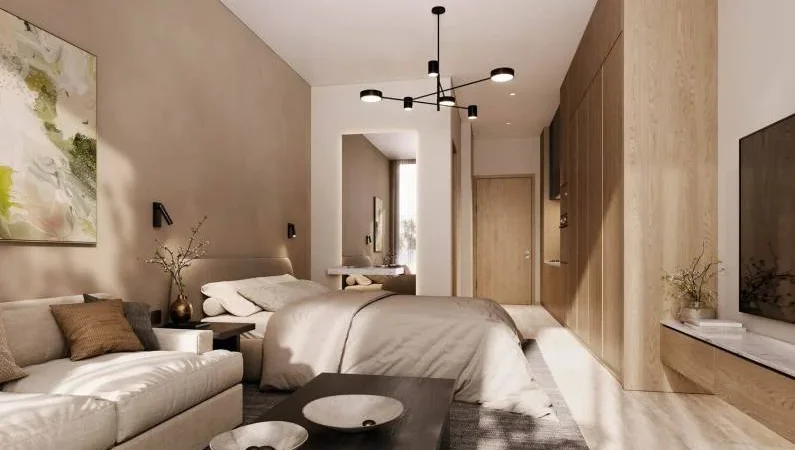
In Dubai’s premium residential market, the words “luxury finish” appear in nearly every development brochure. What separates genuine quality from marketing language is the specificity of what is actually delivered: the materials selected, the craftsmanship applied, the furniture brands sourced, and the consistency with which standards are maintained across every unit in the building.
At Berkeley at Dubai Hills Estate, the interior design and finishing specification is an extension of the development’s core concept — hotel-inspired living. This is not a decorative idea. It is a design brief that has direct implications for every surface, fixture, fitting, and furniture piece in every apartment. Understanding what that specification means in practice helps buyers and investors evaluate what they are purchasing and why it commands the premium it does within Dubai Hills Estate’s residential market.
This article examines Berkeley’s interior design philosophy and finishing standards in depth — without revisiting floor plan layouts, smart home technology, or amenity spaces covered in separate articles on this blog.
The Design Concept: Hotel-Inspired Living as a Specification Standard
The hotel-inspired concept that defines Berkeley is most tangibly expressed through its interiors. In luxury hotel design, every material choice, every spatial proportion, every lighting decision, and every piece of furniture is selected and curated to create a coherent, elevated sensory experience. Nothing is accidental, and nothing is value-engineered to the point of compromising the overall impression.
Berkeley applies the same discipline to its residential interiors. The design team behind the development has approached each apartment as a hospitality project — asking not what the minimum acceptable specification is, but what specification produces the living experience that justifies the Berkeley positioning within Dubai Hills Estate’s market.
The result is an interior language that is contemporary without being cold, refined without being sterile, and residential without compromising on the polish and precision that hotel-grade living implies. Warm neutral palettes, natural material textures, controlled lighting architectures, and carefully proportioned furniture are the consistent threads running through every unit type.
Flooring: Materials, Finishes, and Spatial Logic
Flooring is one of the most impactful finishing decisions in any interior — it covers more visual area than any other single element and establishes the tonal foundation from which every other material is read.
Berkeley’s flooring specification reflects the dual requirements of aesthetic quality and durability under high-use conditions. Living areas and bedrooms feature engineered materials with natural stone or high-quality porcelain finishes, selected for their visual warmth, surface consistency, and long-term wear performance. Large-format tiles — a signature of contemporary premium interiors — are used throughout living zones to create a sense of spatial continuity and to minimise the visual interruption of grout lines.
Bathrooms use stone-effect porcelain or natural stone finishes that are consistent with the overall design palette of the apartment, creating a visual continuity between wet and dry spaces that is characteristic of well-designed hospitality interiors. The floor-to-wall material transitions in bathrooms are handled with the same attention to detail as public areas in five-star hotels — seamless, deliberate, and finished to a standard that photographs and presents exceptionally well.
Kitchens: Specification, Appliances, and Cabinetry
The kitchen is the room where finishing standards are most clearly revealed through use. Surfaces that look impressive on a show unit but fail under daily cooking and cleaning reflect a specification that was designed for sales photography rather than lived experience. Berkeley’s kitchen specification is built around a different premise — that the kitchen must function impeccably for a professional tenant cooking daily, a short-stay guest using the space casually, and every occupant type in between.
Cabinetry throughout Berkeley’s kitchens is custom-specified to the development’s interior design palette. Handle-free designs with soft-close mechanisms are standard — a detail that reflects hospitality-grade joinery practice and eliminates the visual interruption of hardware in a clean contemporary kitchen. Cabinet finishes are selected for their resistance to humidity, heat, and daily contact, with surfaces that maintain their appearance over extended use.
Countertops use composite stone or engineered quartz materials that offer the visual richness of natural stone with superior resistance to staining and chipping — a practical specification choice that reflects genuine understanding of how kitchen surfaces behave in high-occupancy residential settings.
Integrated appliances are specified from established European brands and include at minimum: a built-in oven, ceramic or induction hob, integrated refrigerator, dishwasher, and washing machine or washer-dryer combination. The integration of all appliances behind cabinetry panels maintains the clean visual line of the kitchen and prevents the kitchen from reading as a utilitarian space within what is otherwise a refined living environment.
Bathrooms: Fixtures, Fittings, and the Hospitality Standard
Bathrooms in premium residential developments are the space where the gap between standard and genuinely exceptional finishing is most immediately apparent. In hotel design, the bathroom is treated as a private sanctuary — a space where the quality and weight of every tap, the precision of every tile joint, and the functionality of every fixture contribute to a cumulative sensory experience that either confirms or undermines the development’s overall quality claim.
Berkeley’s bathroom specification follows this hospitality logic. Sanitaryware — basins, toilets, and shower trays — is sourced from premium European manufacturers known for both design quality and long-term durability. The visual language of Berkeley’s bathrooms is contemporary and refined: wall-hung fixtures, concealed cisterns, frameless shower enclosures or wet room configurations where layout permits, and vanity units that echo the cabinetry language of the kitchen.
Brassware — taps, shower heads, and accessories — is finished in consistent brushed metallic tones that complement the overall design palette of the apartment. The consistency of hardware finishes across kitchen and bathroom spaces is a detail that distinguishes considered interior design from room-by-room specification decisions that produce visual incoherence across the apartment.
Master bathrooms in one-bedroom and two-bedroom apartments receive an elevated specification relative to secondary bathrooms: larger shower enclosures, premium vanity configurations, and enhanced lighting arrangements that reflect the master bathroom’s role as the primary daily wellness space for the apartment’s occupants.
Furniture: Curation, Scale, and Brand Standards
Berkeley’s fully furnished delivery is one of its most commercially significant differentiators in Dubai Hills Estate’s residential market. The furniture package is not an afterthought added to support marketing photography — it is a designed component of the overall interior that has been selected and scaled specifically for Berkeley’s floor plans and design concept.
Furniture selection follows the same hospitality brief as the fixed finishes. Pieces are chosen for their visual weight, material quality, and proportional relationship to the space they occupy. A sofa that is too large makes a living room feel cramped. A dining table that is too small makes a space feel under-furnished. Berkeley’s furniture curation addresses these proportional relationships unit-type by unit-type, with selections scaled to each floor plan’s specific dimensions.
Materials across the furniture package prioritise durability alongside aesthetics — upholstery fabrics that resist wear and maintain their appearance under regular cleaning, hard surfaces in stone, glass, or quality engineered wood that perform well in the Dubai climate, and bed frames and case goods in materials that hold up under the frequent turnover that a short-term rental programme introduces.
Beds in all bedroom configurations are specified with premium mattresses and bases that meet the comfort standard guests and long-term tenants expect from a hotel-grade residential address. Bedding and linen packages are included in the full furnished delivery, maintaining the immediate occupancy-ready character of each unit.
Lighting Design: Architecture, Atmosphere, and Control
Lighting in Berkeley’s apartments operates on two levels. The first is functional — providing adequate, well-distributed illumination for daily tasks across kitchen, living, and bedroom zones. The second is atmospheric — creating the ability to shift the apartment’s ambience from bright and productive to warm and relaxed through layered lighting control.
Ceiling lighting throughout Berkeley’s apartments uses recessed fixtures that maintain the clean ceiling plane — a characteristic of hospitality interior design that avoids the visual clutter of surface-mounted fittings. Warm colour temperatures are specified throughout living and bedroom spaces, reflecting the researched preference for warmer light in residential environments and the aesthetic requirement of the hotel-inspired design brief.
Feature lighting in living and dining areas — concealed cove lighting, pendant fittings over dining configurations, bedside reading light provisions — adds the atmospheric layer that distinguishes Berkeley’s interior from standard developer specifications. These lighting provisions also integrate with the smart home control systems covered in a separate article, allowing occupants to manage lighting scenes from a single interface.
Windows, Doors, and Built-In Joinery
The quality of a finished interior is revealed as much in its details as in its headline materials. Window and door specifications, internal joinery, and hardware selection are the details that experienced property buyers use as proxies for the overall specification standard — because these are the elements that are hardest to fake with photography and easiest to assess in person.
Berkeley’s windows are floor-to-ceiling double-glazed units that meet the thermal and acoustic performance requirements of premium residential construction in Dubai. The glazing specification serves both the visual purpose — maximising views and natural light — and the practical purpose of reducing heat gain and external noise, both of which are significant quality-of-life factors in a Dubai apartment.
Internal doors throughout Berkeley’s apartments are solid-core, full-height units with integrated door furniture in finishes consistent with the apartment’s overall hardware palette. Full-height doors — reaching the ceiling rather than stopping at a standard 2.1 metre height — are a detail that visually amplifies ceiling height and is characteristic of hotel-grade residential interiors.
Built-in joinery — wardrobes, TV units, and storage solutions specified within the design — is custom-made for each unit type and integrated into the apartment’s layout. Unlike standalone furniture that can be moved or replaced, built-in joinery is a permanent expression of the specification standard and a detail that buyers and tenants assess carefully.
Finish Consistency Across All Units
One of the most commercially significant aspects of Berkeley’s finishing standards is their consistency across all unit types and floor levels. Studios receive the same quality of flooring, cabinetry, bathroom fixtures, and furniture as two-bedroom units. The specification does not vary by unit price point in ways that would be visible or tangible to occupants — a discipline that is common in hotel development but less consistently applied in residential projects.
This consistency has direct investment implications. It means that a studio owner at Berkeley can present their property to prospective tenants or buyers with the same confidence in quality as a two-bedroom owner. It also means that the development’s reputation for quality — which directly affects resale values and rental premiums over time — is supported uniformly across the entire building rather than concentrated in its premium units.
A Specification Built for the Long Term
Berkeley’s interior design and finishing standards are the physical expression of its hotel-inspired concept — and they represent a specification built to perform as well in the fifth year of occupancy as in the first. For buyers and investors, this is the dimension of quality that compounds over time: well-specified interiors hold their value, retain tenants, attract premium guests, and reduce the lifecycle cost of maintaining the asset in a condition that supports its market positioning.
Understanding what you are buying — the materials, the brands, the design logic, and the durability characteristics — is what separates an informed property decision from one based solely on visuals and marketing narrative. At Berkeley, the specification stands up to scrutiny.
Frequently Asked Questions
Are Berkeley Dubai apartments delivered fully furnished, and what does the furniture package include?
Yes, all apartments at Berkeley — studios, one-bedrooms, and two-bedrooms — are delivered fully furnished as part of the purchase price. The furniture package covers all primary living areas and includes: living room seating, coffee and side tables, dining table and chairs, complete bedroom furniture including bed frame, mattress, and storage, kitchen appliances as listed in the specification, bathroom accessories and fittings, soft furnishings including window treatments and rugs, and bedding and linen packages. The package is curated specifically for each unit type’s floor plan dimensions and design palette, and is not a generic off-the-shelf furniture selection.
What brands are used for kitchen appliances at Berkeley Dubai?
Soho Development specifies appliances from established European manufacturers for Berkeley’s kitchen packages. While specific brand selections should be confirmed directly with the sales team as specifications may be updated across construction phases, the appliance category covers integrated oven, hob, refrigerator, dishwasher, and laundry appliance as standard. The integration of all appliances within cabinetry is consistent across all unit types. For investors intending to operate short-term rentals, the inclusion of a full integrated appliance suite eliminates a significant pre-letting fit-out cost that would otherwise apply to unfurnished or shell purchases.
Can buyers customise the interior finishes or furniture at Berkeley Dubai?
Berkeley’s interior design and furniture specification is standardised across the development as part of Soho Development’s quality control and design consistency programme. Limited customisation options may be available at certain stages of the purchase process for buyers who reserve early in the sales cycle — typically covering finish palette selections within the design system rather than wholesale changes to the specification. The extent of available customisation and the timeline within which selection decisions must be made is best confirmed directly with the development sales team at the point of reservation.
How does Berkeley’s finishing standard compare to other furnished developments in Dubai Hills Estate?
Berkeley’s specification is positioned at the upper end of the furnished residential market within Dubai Hills Estate. The combination of hotel-inspired design brief, integrated European appliances, custom joinery, full-height doors and glazing, premium bathroom fixtures, and a curated furniture package across all unit types represents a finishing standard that is consistent with comparable developments in Dubai’s luxury serviced apartment segment. For investors, the finishing standard directly affects the achievable rental premium over standard residential comparables in the same community — a premium that is most clearly expressed in short-term rental yield data and in the long-term tenant quality that a premium finish attracts.
How durable are the finishes under rental use, particularly for short-term lettings?
Berkeley’s specification has been selected with rental use in mind — both long-term and short-term. Flooring materials are chosen for wear resistance as well as aesthetics. Cabinetry uses durable surface treatments that withstand cleaning and daily contact. Upholstery fabrics are selected for their performance under regular use and cleaning cycles. Bathroom fixtures are sourced from manufacturers whose products are used in commercial hospitality environments where durability under high-frequency use is a primary selection criterion. For investors operating short-term rentals with frequent guest turnovers, the specification’s durability characteristics reduce the frequency and cost of refurbishment relative to residential specifications that were designed for owner-occupier use rather than rental operations.